August 28, 2026 · 10 min read
How Often Should an Executive Team Review SEO Performance?
Search should be measured continuously, operated frequently, and escalated to executives at the cadence appropriate to the decision—not every time a keyword moves.
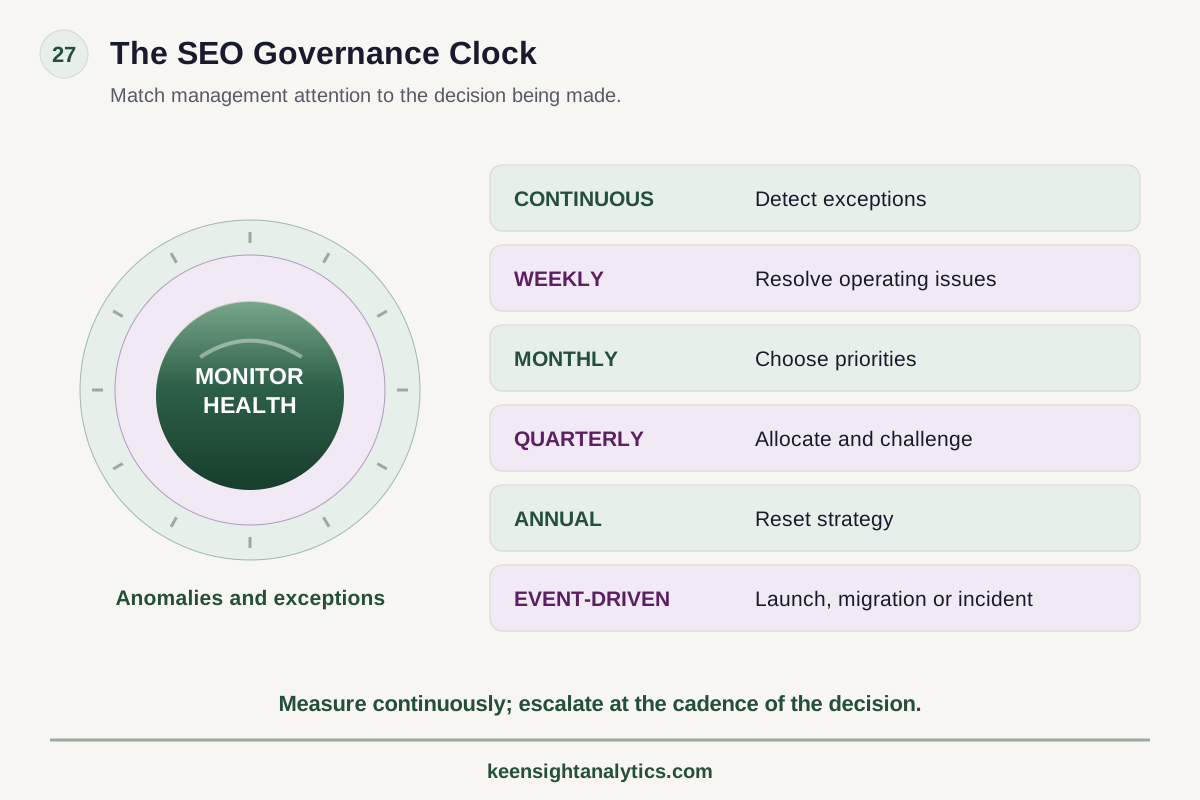
The framework
SEO governance cadence
Match management attention to the decision being made.
Continuous
Detect exceptions.
Weekly
Resolve operating issues.
Monthly
Choose priorities.
Quarterly
Allocate and challenge.
Annual
Reset strategy.
Event-driven
Review a launch, migration or incident.
Measure continuously; escalate at the cadence of the decision.
Measurement next step
Use a stable baseline and competitive frame before turning a reporting change into an implementation recommendation.SEO creates a reporting-cadence problem because the underlying system moves at several speeds at once.
A noindex mistake can damage a site quickly. Competitive share usually needs a longer window to interpret. Content may take time to be crawled, indexed, evaluated, and discovered. Local visibility can shift across geography. Search demand can change seasonally. AI-search answers can vary from one run to another.
If executives review every daily movement, noise becomes strategy. If they review search once a year, meaningful competitive changes can compound for months.
The solution is a layered operating cadence.
1. Separate monitoring from management attention
Measurement can be continuous without requiring continuous meetings.
Monitoring systems should watch for important technical, visibility, analytics, and competitive anomalies. Most observations should be handled by operators. Executive attention should be reserved for changes that require a decision, expose material business risk, or alter resource allocation.
This distinction keeps leadership informed without training the organization to react to every fluctuation.
2. Continuous or daily: automated anomaly detection
Some signals justify frequent automated checks:
- site availability;
- robots.txt changes;
- sitewide noindex or canonical anomalies;
- analytics failures;
- major sitemap or status-code changes;
- critical page removals;
- large traffic or impression anomalies;
- migration redirects during a launch window.
These are not executive dashboard items by default. They are exception-detection mechanisms.
Escalation should depend on scope and commercial impact. A crawler warning on an old article does not deserve the same response as a noindex directive on every product category.
3. Weekly: operator health review
A weekly search-health review is useful for the team responsible for day-to-day performance.
Review:
- unexpected indexation changes;
- technical incidents;
- large page-group visibility movements;
- major competitor changes;
- local visibility anomalies;
- analytics or conversion tracking issues;
- recent deployments;
- implementation progress on priority work.
The objective is triage. Most weekly findings should either be closed as noise, assigned for investigation, or added to a prioritized backlog.
4. Do not turn weekly reviews into ranking theater
Weekly keyword movement is easy to report and easy to overinterpret.
Rankings vary by location, device, result composition, personalization, and measurement method. Search Console average position is also an aggregate metric with specific calculation rules.
Use weekly rankings to detect unusual movement in important segments, not to celebrate every gain or demand explanations for every one-position decline.
5. Monthly: operating review
The monthly review is where search performance becomes an operating system.
A useful agenda includes:
- competitive visibility by strategic segment;
- commercial landing-page performance;
- qualified conversion contribution;
- largest competitive wins and losses;
- technical risks and remediation progress;
- content or authority work completed;
- local and AI-search changes where relevant;
- next-month priorities and dependencies.
This cadence is long enough to reduce daily volatility while short enough to adjust implementation.
6. Keep the monthly meeting focused on decisions
Do not spend the meeting reading the dashboard aloud.
For every major movement, state:
- what changed;
- where it changed;
- likely cause;
- confidence level;
- commercial importance;
- recommended action;
- owner and next checkpoint.
If no action or investigation is required, the metric may belong in the appendix rather than the meeting.
7. Quarterly: executive strategic review
Quarterly is often the right default for a deeper executive search review because it supports budget, strategy, and market-position decisions.
Step back from individual pages and ask:
- Are we gaining or losing search-market share?
- Which services, products, industries, or markets changed most?
- Which competitors are gaining fastest?
- Did the content portfolio create commercial value?
- Are technical constraints materially limiting growth?
- Is local visibility improving across priority markets?
- Is AI-search visibility changing in a meaningful way?
- Does the current operating model still fit the problem?
- Should resources be reallocated?
The executive conversation should be about market position and investment, not metadata.
8. Annual: strategy and portfolio reset
An annual search review should revisit assumptions that monthly reporting treats as stable.
Review:
- the query universe;
- strategic weights;
- competitor cohort;
- service and product priorities;
- industry and location expansion;
- content portfolio health;
- measurement methodology;
- technology architecture;
- agency or internal ownership model;
- major upcoming migrations or launches.
A measurement system should be stable enough for comparison but not frozen after the business and search market change.
9. Use event-driven reviews when the site changes materially
Calendar cadence is not enough.
Trigger special reviews around:
- site redesigns;
- domain or CMS migrations;
- major product launches;
- large content consolidations;
- location openings or closures;
- mergers and acquisitions;
- major search-platform changes;
- unexpected traffic or indexation losses.
A migration may require daily monitoring for two weeks even if the normal executive cadence is quarterly.
10. Define escalation thresholds before the anomaly happens
Teams make better decisions when escalation rules are predetermined.
Examples might include:
- a material percentage of priority pages becoming nonindexable;
- a sudden sustained loss in weighted visibility for a major service line;
- a measurement outage affecting executive KPIs;
- a migration redirect failure across a high-value URL group;
- a local visibility collapse across several priority markets;
- a competitor gaining share above an agreed threshold in a strategic category.
The exact thresholds depend on the business. The important point is to separate ordinary volatility from material risk in advance.
11. Match cadence to the type of SEO work
Different engagement models require different operating rhythms.
A fixed Technical SEO Project may have milestone-based reviews tied to audit, implementation, QA, and verification.
Managed Search needs recurring operating reviews because technical, content, authority, competitive, and measurement work interact continuously.
Search Benchmarking or monitoring can deliver independent performance reporting while the client or incumbent agency owns implementation.
Search Intelligence is a one-time diagnostic engagement and should culminate in a decision framework rather than an ongoing reporting cadence unless the buyer separately chooses monitoring.
Cadence should reinforce the ownership model rather than blur it.
12. Keep a stable core scorecard
Frequent metric changes make longitudinal reporting difficult.
Maintain a core set such as:
- weighted competitive visibility;
- priority segment performance;
- commercial landing-page conversions;
- competitor win/loss movement;
- material technical risk;
- local coverage where relevant;
- AI-search visibility where relevant.
Add temporary diagnostic metrics when necessary, but do not rebuild the executive scorecard every month.
13. Separate reporting windows by metric
Not every metric should use the same comparison period.
Technical incidents may require day-over-day monitoring. Local visibility might be reviewed weekly or monthly. Content portfolios may need longer observation windows. Seasonal businesses often need year-over-year comparisons. Competitive share can be viewed monthly and quarterly.
The cadence should match the signal's natural volatility and the decision being made.
14. Build an annotation discipline
Every review becomes more useful when the organization records what changed between periods.
Annotate:
- deployments;
- technical fixes;
- new page launches;
- content consolidations;
- digital PR or major link events;
- campaigns that affect brand demand;
- analytics changes;
- known search-platform events.
This does not prove causality, but it gives investigations a much stronger starting point.
15. A practical governance calendar
Continuous: automated technical and measurement anomaly detection.
Weekly: operator health review and triage.
Monthly: performance, implementation, and priority review.
Quarterly: executive market-position and investment review.
Annually: query universe, competitor cohort, portfolio, measurement, and strategy reset.
Event-driven: migrations, major launches, incidents, and material market changes.
Good cadence protects the business from both panic and neglect
Search moves too quickly to review once a year and too noisily to manage from daily keyword changes.
The right operating model monitors frequently, diagnoses at the specialist level, reviews implementation monthly, and brings executives into the conversation when market position, risk, or resource allocation actually requires their attention.
When this becomes a measurement program
Choose the cadence based on the decision—not the dashboard.
Search Benchmarking fits recurring executive comparison. Monitoring fits continuous measurement when an internal team or incumbent executes changes. Search Intelligence fits a deeper one-time diagnosis when leadership needs to understand why visibility changed before choosing implementation.Match the agenda to the cadence
Weekly: anomalies, incidents, launches, and operator actions. Monthly: page-group movement, completed work, conversion contribution, competitive movement, and near-term priorities. Quarterly: visibility share, market changes, budget, ownership, major portfolio decisions, and whether the operating model still fits.
Escalate sooner for migration defects, indexation loss, tracking failure, or material movement in high-value commercial page groups.
Match the recurring measurement layer to the review cadence
Weekly, monthly and quarterly SEO reviews should not repeat the same ranking deck at different intervals. Use the Free Visibility Preview for an initial market signal and Search Intelligence when a material anomaly or strategic question needs one-time diagnosis before the next review cycle.
Use Search Benchmarking for the stable market and competitor frame that supports monthly and quarterly leadership comparison. Use Monitoring for ongoing observation and anomaly detection when another team owns implementation. The executive metric framework defines what belongs in the scorecard; cadence determines when each layer should be reviewed and escalated.
Decision checkpoint
Make sure the metric is tied to a decision before building another dashboard.
Measurement should establish a stable denominator, competitive frame, and cadence. It should not silently become implementation advice.- 01DefinitionAre the query set, competitor cohort, geography, weighting, page groups, and conversion definitions stable enough to compare over time?
- 02DecisionWhat action will leadership take if the metric moves materially up, down, or sideways?
- 03OwnershipDoes KeenSight only measure, or is there a separate requirement for diagnosis or managed implementation?
A Layered SEO Operating Cadence
Continuous + weekly
Use automated monitoring and operator triage for technical incidents, anomalies, deployments, and early competitive changes.
Monthly
Review commercial segments, implementation progress, conversion contribution, technical risk, and near-term priorities.
Quarterly
Bring executives a market-position view: search share, strategic gains and losses, competitors, risk, and investment decisions.
Event-driven
Increase monitoring and review frequency during migrations, launches, incidents, and material market changes.
Search measurement
Choose the measurement product by the decision and cadence.
Compare other ways to get help
Build a reporting cadence around the decisions you need to make
Search Benchmarking provides an independent measurement layer when your internal team or incumbent agency owns implementation.
Keep Reading
The SEO Metrics Executives Need
Define the scorecard that belongs inside the monthly and quarterly review.
Read article →Why Ranking Reports Can Mislead
Avoid turning frequent keyword volatility into false management signals.
Read article →Search Measurement Cadence
Review the evergreen framework for matching measurement frequency to decision frequency.
Read explainer →Make it specific
See what the market looks like for your company.
The free visibility preview turns a broad search topic into a limited personalized baseline.